Vision
To lead in creating impactful knowledge that informs policymaking, shapes public discourse, and promotes digital responsibility.
About
An independent research organization studying how online dynamics shape political conflict, and how evidence can steer them toward healthier outcomes.
Overview
Neo Momentum, established in 2021, is dedicated to fostering actionable knowledge and driving positive societal change through modern research and analysis.
Specializing in interdisciplinary studies, advanced data analytics, and social media monitoring, we address issues like online violence and political conflict, while supporting policy development, social engagement, and responsible digital practices.
We collaborate with diverse partners, including businesses, civil society, and academic institutions, to drive sustainable social transformation.
We strive to drive sustainable change through research excellence and innovation, building a better society in the digital era.
To lead in creating impactful knowledge that informs policymaking, shapes public discourse, and promotes digital responsibility.
To conduct innovative and cutting-edge research, develop effective solutions to address societal challenges, and foster knowledge sharing while building strong networks that drive meaningful and sustainable social impact.
In the News
A collection of news coverage and articles from external media referencing our organization, research, and team.
Coverage of talks, forums, and meetings where we presented our research.

The article reports on our presentation, Lessons from the 2023 Election Information War, highlighting the key findings we shared on the evolution of Thailand’s online political information environment between 2023 and 2025. It summarizes our analysis of how emotions have driven the spread of misleading information and presents our recommendation that responses to misinformation should address the emotional factors behind information sharing alongside conventional fact-checking.
Read article →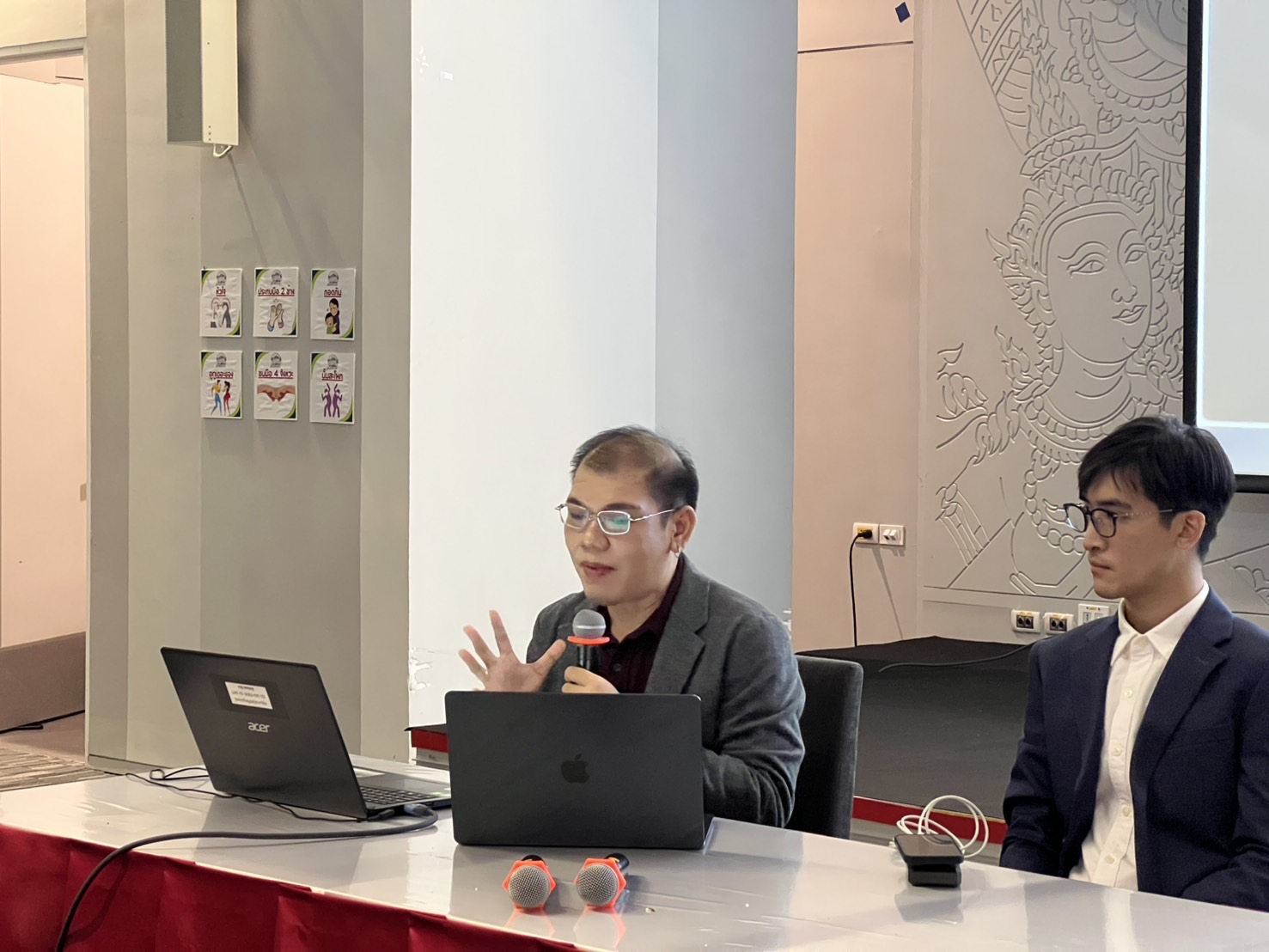
At the event, we presented our research, The Digital Political Landscape and the Fragility of Thailand’s Democratic Process. We highlighted how Thailand’s digital political communication landscape has changed significantly since the 2023 general election. The focus of online attacks has shifted from political parties and policy issues toward individual political figures and political institutions. Our findings also showed that negative emotions, particularly anger and fear, have become key drivers of public reactions and engagement with information across digital platforms.
Read article →
During the morning panel discussion at the event, we presented findings showing that facts alone may not be enough in tense conflict situations, since people’s emotions strongly influence how they perceive, interpret, and decide to believe information.
Articles that cite or draw on our research data and findings.
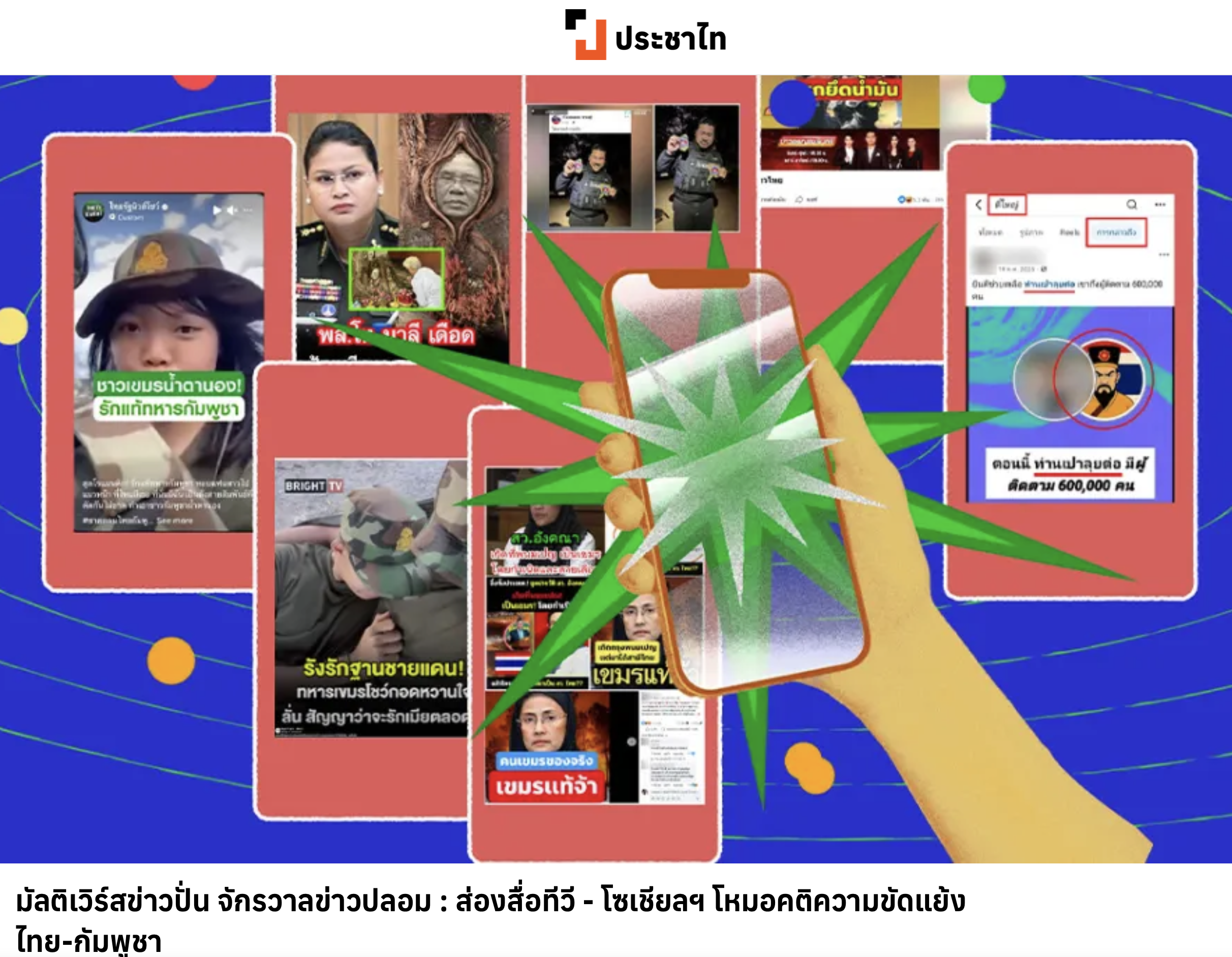
Prachatai · 9 April 2026
The article cites findings from our research project, Why Is There So Much Anger?: Exploring Emotional Landscapes and Online Narratives Amid Thailand–Cambodia Border Tensions. Specifically, it draws on our analysis of data from X to illustrate trends in the use of hashtags related to the Thailand–Cambodia conflict and the posting frequency of accounts that actively amplified these hashtags. The data and visualizations we co-produced were used to support the article’s analysis of the role of mainstream media in shaping and amplifying conflict-related narratives on social media.
Read article →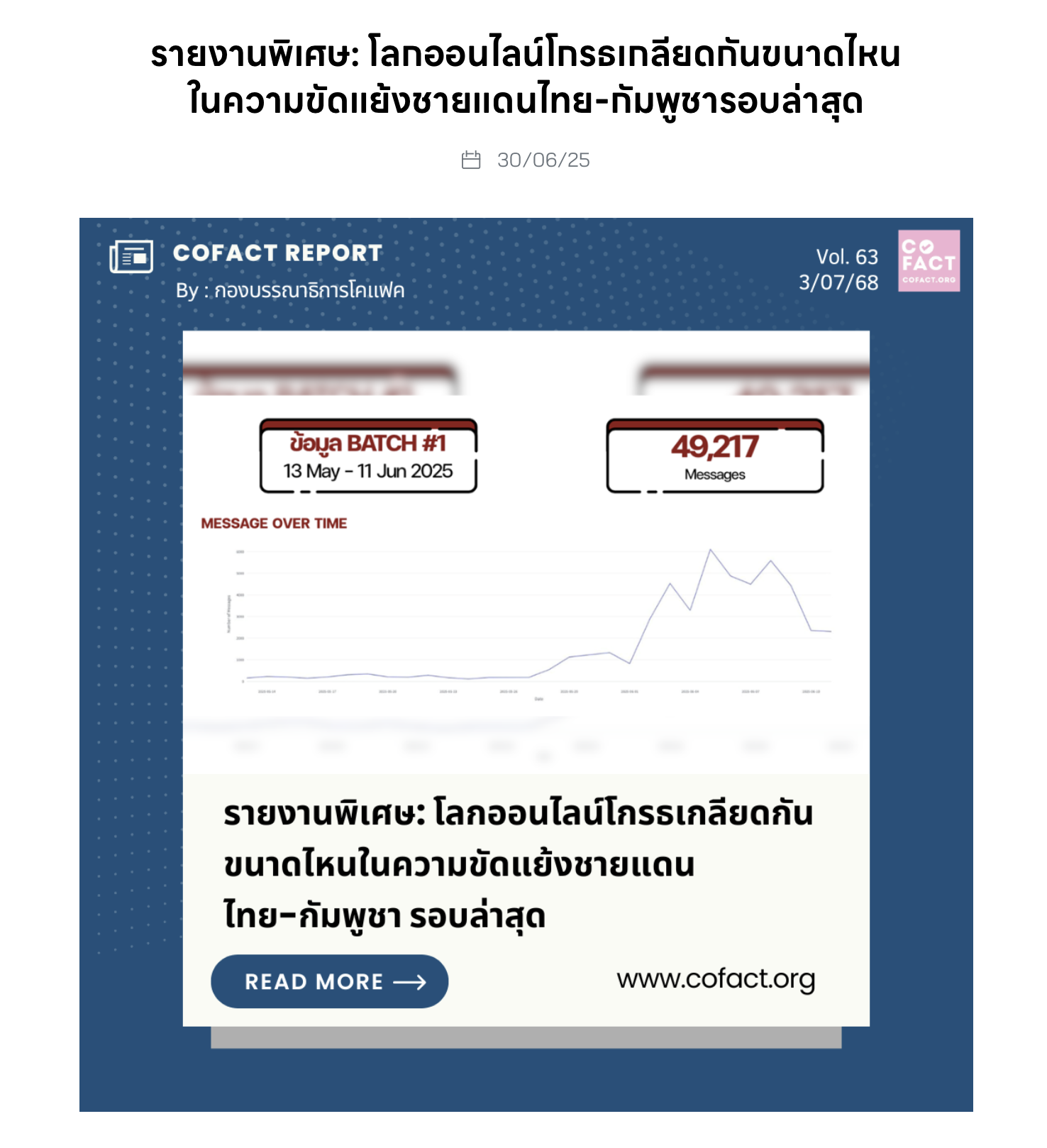
Cofact, Editorial Team · 30 June 2025
The article presents the findings from our research project, Why Is There So Much Anger?: Exploring Emotional Landscapes and Online Narratives Amid Thailand–Cambodia Border Tensions. It summarizes our analysis of data from X, including the emotional characteristics of online discussions, the distribution of hate speech severity, key discussion topics, and the behavior of influential accounts that shaped online communication during the Thailand–Cambodia border tensions.
Read article →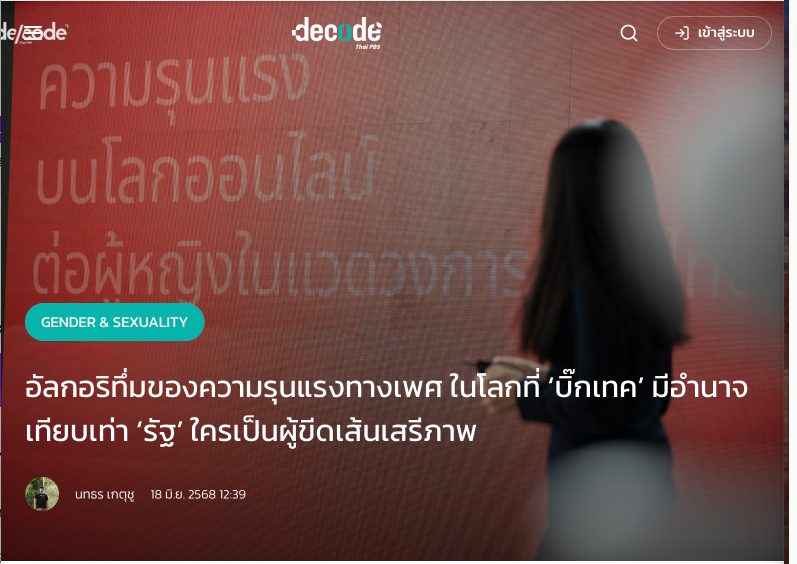
DECODE, Thai PBS · 18 June 2025
The article cites our joint research with CoFact Thailand to highlight the increasing prevalence of malinformation and other harmful online content following Thailand’s 2023 general election and the 2025 local elections. Our findings are used as background evidence in the introduction to illustrate these broader trends.
Read article →